Chapter 14: A forest feeds on a fallen forest! 🌳
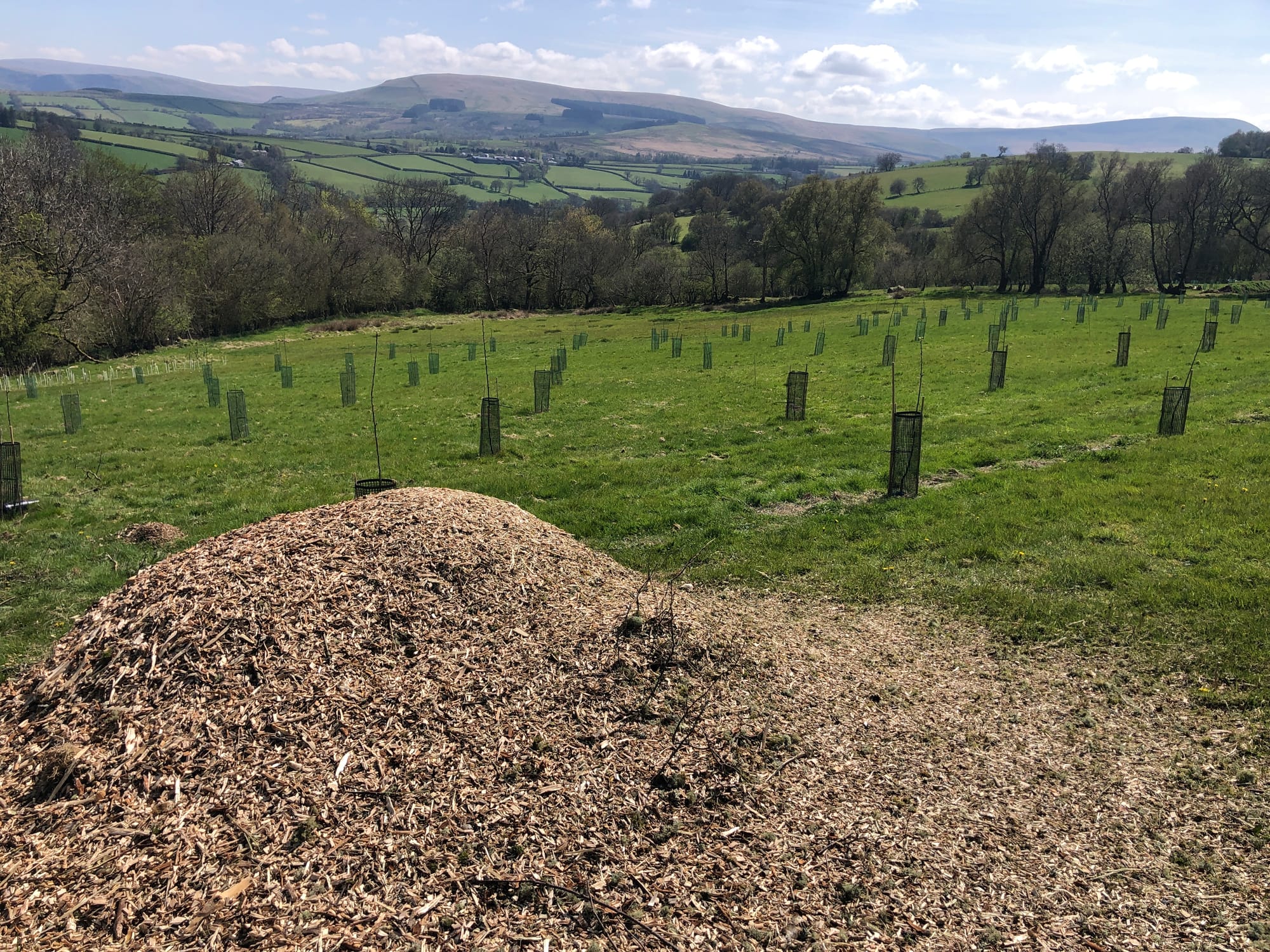
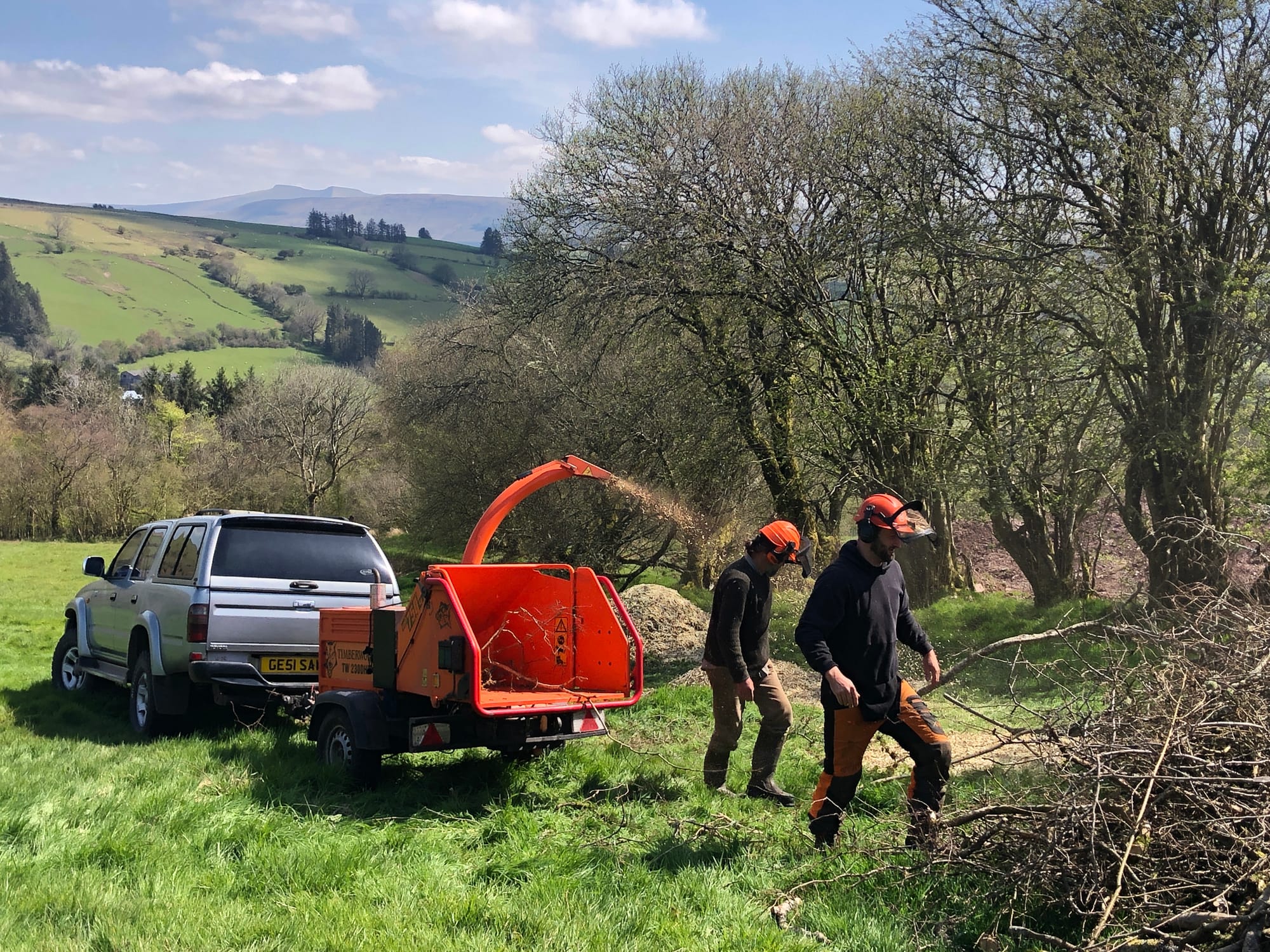
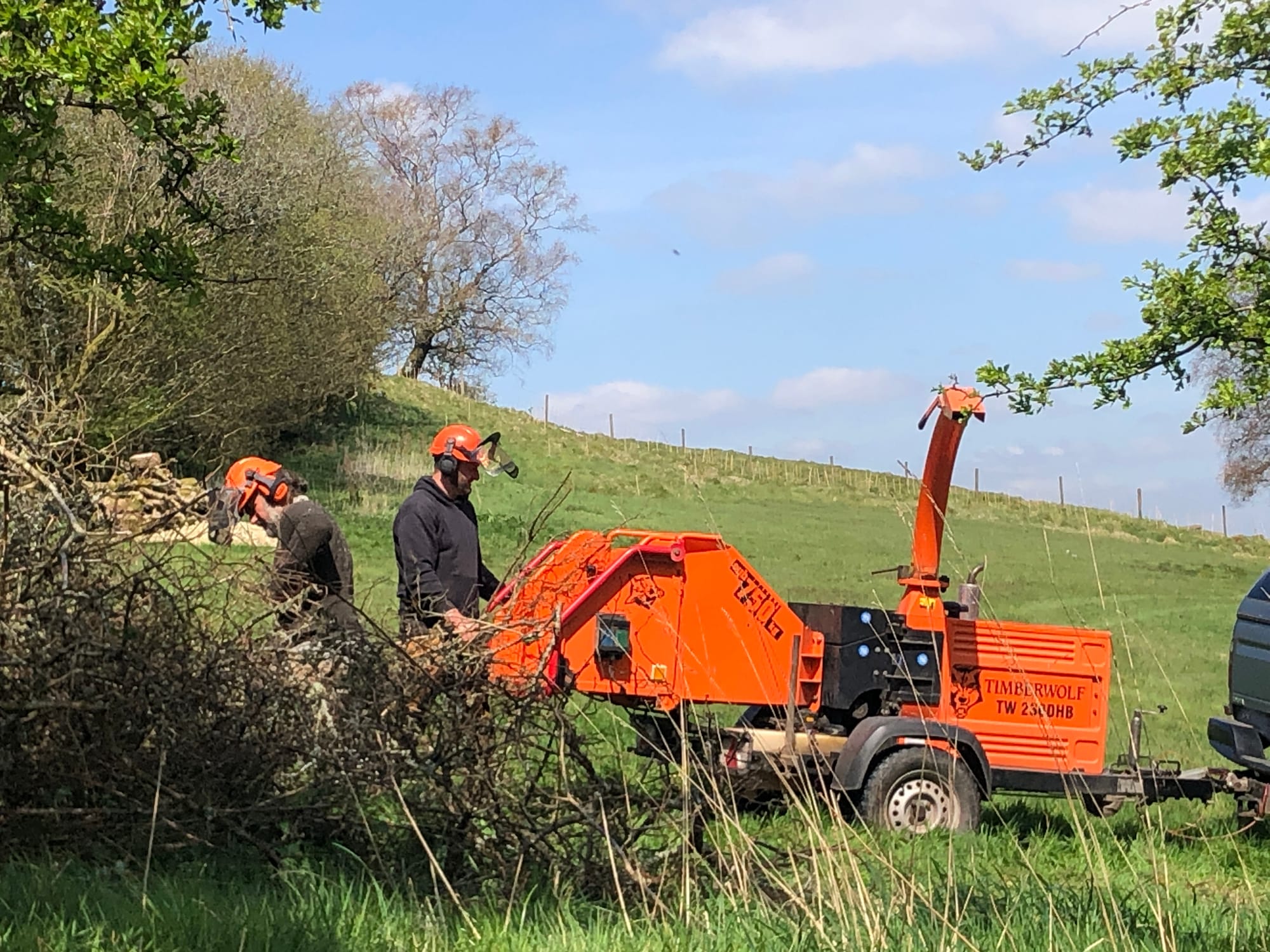
One of the benefits of coppicing an old hedge ready for planting a new hedge is the huge amount of wood you are left with! Not only did the coppiced trunks spring forth with new life, but there were brash piles a-plenty along with several firewood piles laid out for seasoning. A local tree surgeon came round with his Timberwolf and in a day the numerous brash piles became hefty piles of wood-chip all ready to disperse across the orchards.
Our plan is to make mulch mats from cardboard with wood chip on top.
Firstly, the cardboard helps the trees by blocking the light and inhibiting the growth of grass around the trunk. Grass will compete for nutrients and reduce the growth and vigour of a baby tree.
In permaculture, they say that a forest feeds on a fallen forest. The forest floor is all mouth and the fungi are the teeth!
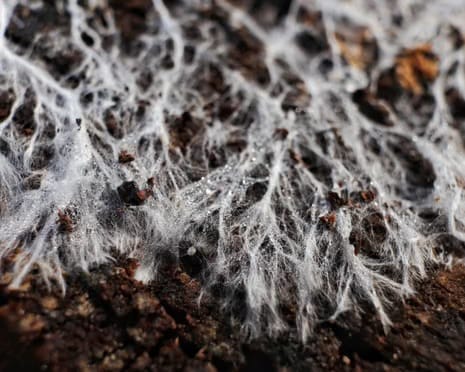
We cover the squares of cardboard with wood chip: the dead fallen trees that would naturally be recycled to feed the emerging forest. The greater surface of the wood chip allows decomposition to happen much faster than if it were a whole branch or trunk of a tree. As it breaks down, there is an explosion of mycelial life, creating a fungal bloom. The fungal bloom, made of mycelial networks, then transports and shares nutrients between the tree roots and the guilded plants (eg comfrey, garlic) ). Magical stuff ✨
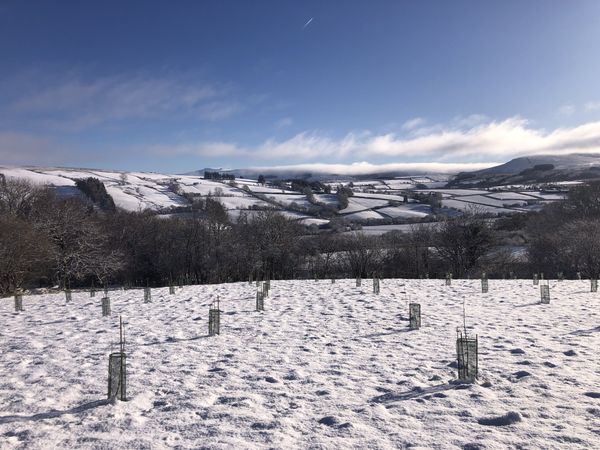
We’ve put a call out for big sheets of cardboard in the area and we begin the mammoth task of nurturing each and every tree, by turning a meadow into an apple forest ! 😮 🌱